A hernia is a common medical condition that occurs when an internal organ or tissue pushes through a weak area in the surrounding muscle or connective tissue. Many people ignore early signs of a hernia because the symptoms may appear mild at first. However delaying diagnosis and hernia treatment can sometimes lead to complications such as increased pain obstruction or strangulation of the hernia.
Recognizing the common symptoms of hernia at an early stage helps patients seek timely medical advice and choose the right treatment approach. With advancements in minimally invasive techniques robotic and laparoscopic procedures have made hernia repair safer, faster and more comfortable for many patients.
What Is a Hernia?
A hernia develops when there is a weakness or opening in the abdominal wall that allows tissues usually part of the intestine or fatty tissue to bulge outward. This bulge may become more noticeable when standing, coughing, lifting heavy objects or performing physical activities.
Hernias can occur in different areas of the body including:
- Inguinal hernia – Occurs in the groin area and is the most common type.
- Umbilical hernia – Develops near the belly button.
- Incisional hernia – Appears at the site of a previous surgical incision.
- Hiatal hernia – Occurs when part of the stomach moves upward through the diaphragm.
Although some hernias may not cause severe symptoms initially, they usually do not heal on their own and require proper evaluation by an experienced surgeon.
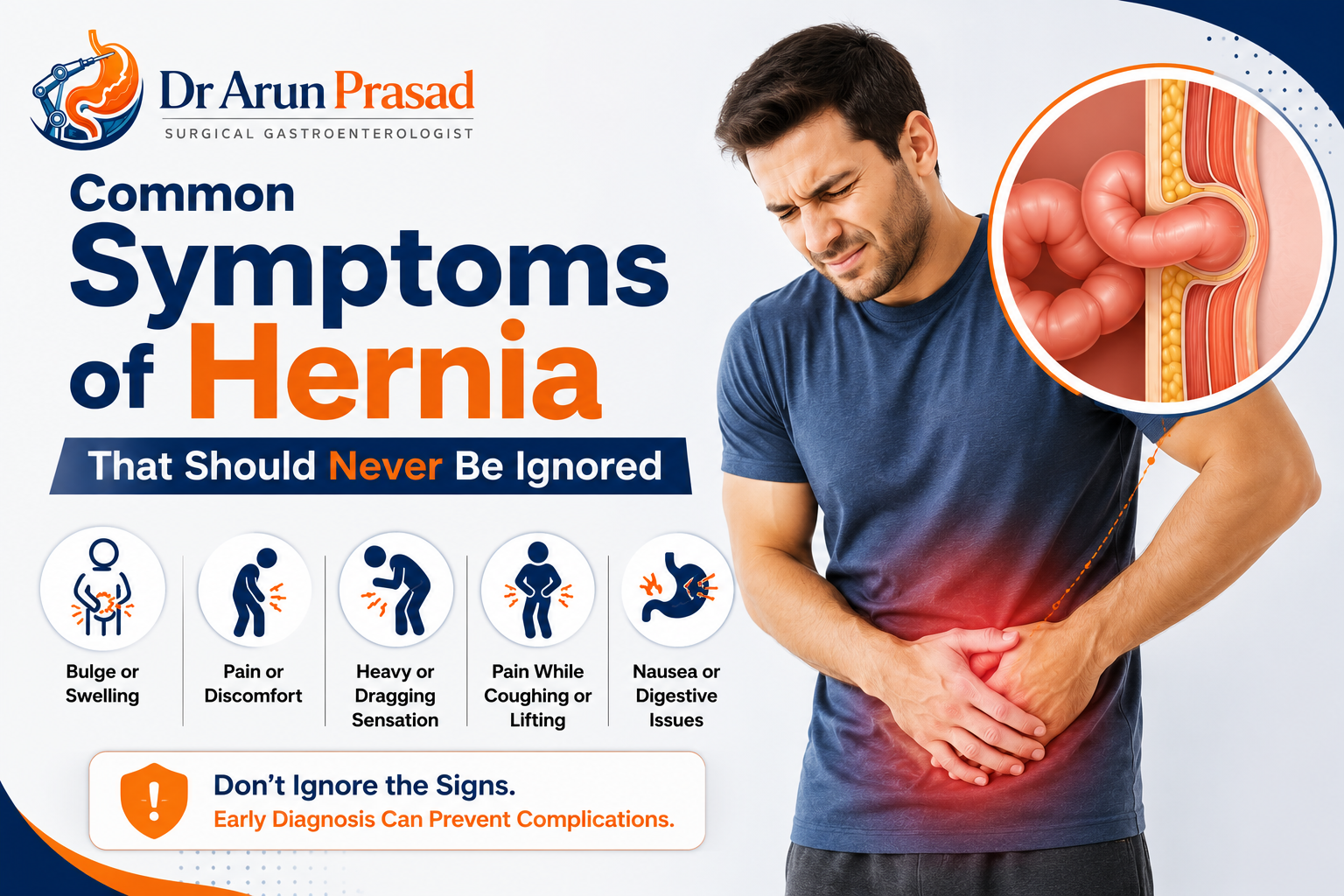
Common Symptoms of Hernia That Should Never Be Ignored
1. Visible Lump or Bulge
One of the most noticeable symptoms of a hernia is a visible swelling or lump under the skin. The bulge may become more prominent when coughing, bending, lifting, or standing for long periods.
Sometimes the lump disappears when lying down, but this does not mean the hernia has healed. A medical evaluation is important to determine the severity and appropriate treatment.
2. Pain or Discomfort in the Affected Area
Many patients experience mild discomfort pressure or pain around the hernia site. The pain may increase during activities that put pressure on the abdominal muscles.
Ignoring persistent discomfort can allow the hernia to grow larger over time and may make future treatment more complex.
3. Feeling of Heaviness or Pressure
A sensation of heaviness or pulling in the abdomen or groin area is another common sign. Patients may feel discomfort while walking, exercising, or standing for extended periods.
This symptom often indicates that tissues are pushing through the weakened muscle area.
4. Pain During Lifting, Coughing, or Straining
Activities that increase abdominal pressure can worsen hernia symptoms. If you experience pain while lifting heavy objects, coughing, sneezing, or during bowel movements, it may indicate the presence of a hernia.
Early consultation with a specialist can prevent the condition from progressing.
5. Digestive Problems or Nausea
Some hernias especially larger abdominal hernias may affect normal digestion. Symptoms such as nausea, vomiting, constipation or difficulty passing gas should not be ignored.
These symptoms can sometimes indicate complications requiring immediate medical attention.
6. Sudden Severe Pain or Hernia Becoming Hard
A hernia that suddenly becomes painful firm or cannot be pushed back inside may indicate a serious condition called strangulated hernia. This happens when the blood supply to the trapped tissue is reduced.
Emergency medical care is required in such situations to avoid serious complications.
When Should You See a Hernia Specialist?
You should consult a qualified surgeon if you notice:
- A growing lump in the abdomen or groin
- Increasing pain or discomfort
- Difficulty performing daily activities
- Sudden severe pain around the hernia
- Changes in bowel movements with hernia symptoms
A specialist can diagnose the condition through physical examination and imaging tests if required. Early treatment often leads to better outcomes and faster recovery.
Modern Hernia Treatment Options
Today hernia repair has advanced significantly. Traditional open surgery is no longer the only option. Minimally invasive techniques such as laparoscopic and robotic assisted hernia repair offer several benefits including
- Smaller incisions
- Reduced postoperative pain
- Faster recovery
- Lower risk of infection
- Improved precision during surgery
Robotic surgery provides enhanced visualization and better instrument control allowing surgeons to perform complex procedures with greater accuracy.
An experienced Best Robotic Surgeon in Delhi can help patients understand whether robotic hernia repair is suitable based on their condition medical history and individual needs.
Why Choose Dr Arun Prasad for Hernia Treatment?
Dr Arun Prasad is an experienced gastrointestinal and robotic surgeon known for providing advanced surgical care using modern techniques. His expertise includes minimally invasive procedures robotic surgery and complex gastrointestinal treatments.
Patients choose Dr Arun Prasad because of:
- Extensive experience in laparoscopic and robotic assisted surgeries
- Patient focused approach with detailed diagnosis and treatment planning
- Use of advanced surgical techniques for better outcomes
- Focus on safety, precision, and faster recovery
- Comprehensive care before and after surgery
With expertise in advanced hernia procedures Dr Arun Prasad works toward providing personalized treatment plans based on each patient’s condition.
If you are looking for the Best Hernia Surgeon in Delhi consulting an experienced specialist can help you receive accurate diagnosis and effective treatment options.
Importance of Early Hernia Diagnosis
Many people delay treatment because they believe a hernia is harmless if the pain is manageable. However untreated hernias may become larger and increase the risk of complications.
Early diagnosis allows doctors to recommend the most suitable treatment approach before the condition becomes more challenging. Regular consultation with an experienced surgeon ensures better management and recovery.
Final Thoughts
A hernia may start with small symptoms but ignoring the warning signs can lead to serious problems. A visible bulge, persistent pain discomfort or digestive issues should never be overlooked.
With advanced robotic and laparoscopic techniques available today, hernia treatment has become safer and more effective. Consulting an experienced specialist like Dr Arun Prasad can help patients receive expert guidance and the right treatment at the right time.
FAQs
1. What is the first sign of a hernia?
A visible lump or bulge in the affected area is usually the first noticeable sign.
2. Can a hernia heal without surgery?
Most hernias do not heal on their own and may require surgical repair.
3. Is hernia surgery painful?
Modern laparoscopic and robotic techniques help reduce pain and improve recovery.
4. When is a hernia considered an emergency?
Sudden severe pain, vomiting, or a hard trapped bulge may require urgent medical attention.
5. How long does recovery take after hernia surgery?
Recovery depends on the type of surgery and patient condition, but many patients return to normal activities within a few weeks.
Other Treatments We Offer :-
Advanced Hernia Surgery Delhi , Best Robotic Surgeon in Delhi , Best Laparoscopic Surgeon in Delhi , Upper GI Surgery Specialist in Delhi