
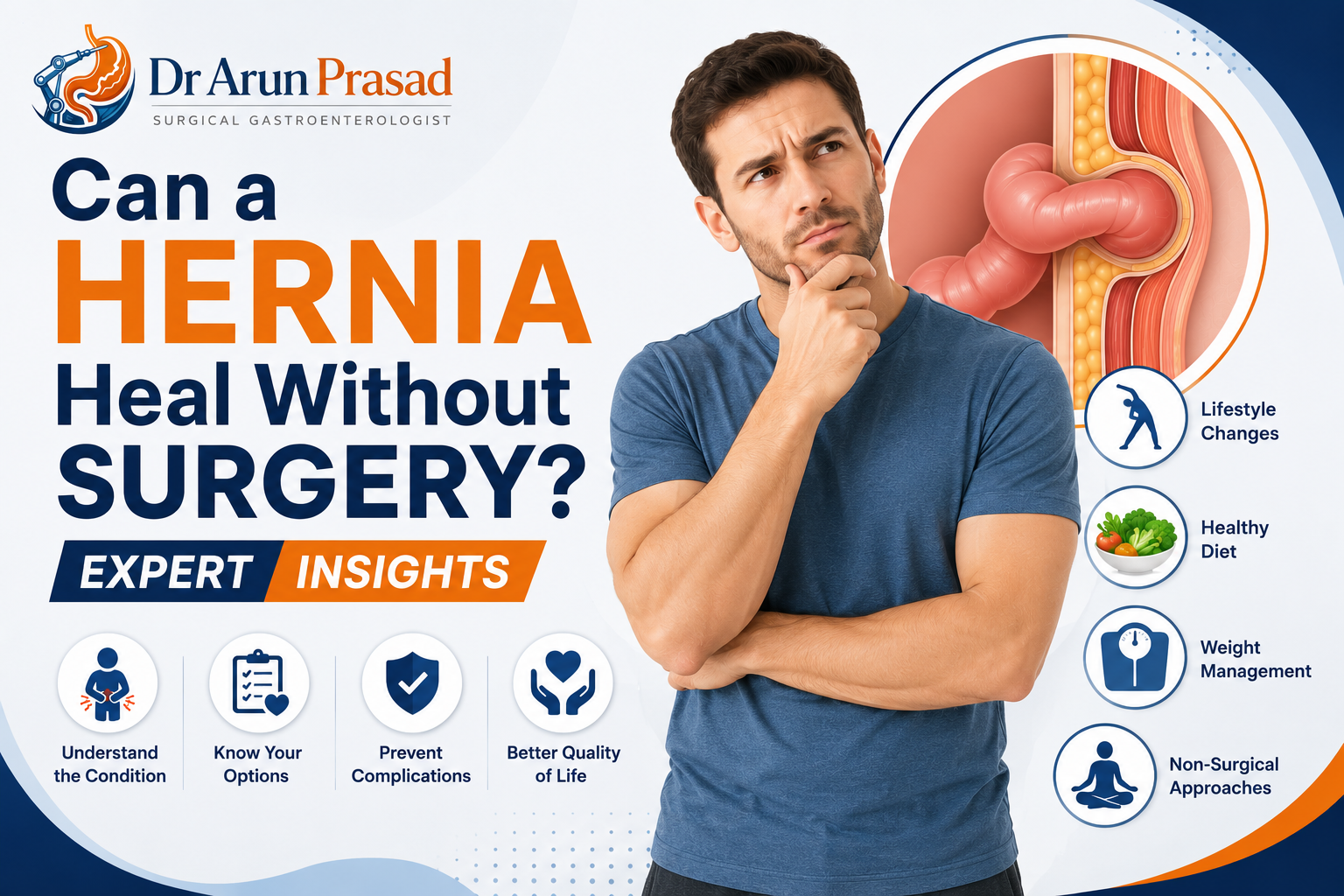
A hernia is a common condition that occurs when an internal organ or tissue pushes through a weak area in the surrounding muscle or connective tissue. Many people diagnosed with a hernia often wonder: Can a Hernia Heal Without Surgery? The simple answer is that most hernias do not permanently heal on their own because the weakened muscle wall cannot repair itself naturally. However, the need for surgery depends on the type, size, symptoms, and overall health of the patient.
If you are experiencing hernia-related symptoms, consulting an experienced specialist is important. Best Hernia Surgeon in Delhi Dr. Arun Prasad provides advanced evaluation and personalized treatment options for different types of hernias using modern surgical techniques.
Understanding Hernia and Why It Happens
A hernia develops when pressure inside the body pushes an organ or fatty tissue through a weak spot in the abdominal wall. Hernias can occur in different areas, including the abdomen, groin, belly button, or previous surgical incision sites.
Common types of hernia include:
- Inguinal hernia (groin area)
- Umbilical hernia (near the belly button)
- Incisional hernia (after previous surgery)
- Hiatal hernia (upper stomach area)
- Ventral hernia (abdominal wall)
Several factors can increase the risk of developing a hernia, such as heavy lifting, obesity, chronic coughing, constipation, pregnancy, aging, and previous abdominal surgeries.
Can a Hernia Heal Naturally Without Surgery?
Unlike minor muscle injuries, a hernia cannot usually repair itself because the opening or weakness in the muscle wall remains present. Lifestyle changes may help manage symptoms, but they cannot close the hernia defect.
Some people with small and symptom-free hernias may be advised to follow a watchful waiting approach. During this period, doctors monitor the condition and recommend precautions to prevent worsening symptoms.
However, delaying treatment without medical guidance can increase the risk of complications.
When Can Hernia Be Managed Without Surgery?
In certain situations, surgery may not be immediately required. A doctor may suggest monitoring when:
- The hernia is small and painless
- Symptoms are mild or occasional
- The patient has medical conditions that increase surgical risks
- The hernia does not affect daily activities
Even in these cases, regular follow ups are important to ensure the hernia does not become larger or complicated.
Signs That Hernia May Require Surgery
Surgery is usually recommended when a hernia causes discomfort, increases in size, or affects quality of life.
You should consult a specialist if you experience:
- Persistent pain or discomfort
- A growing bulge in the abdomen or groin
- Difficulty pushing the hernia back
- Nausea or vomiting
- Sudden severe pain around the hernia area
- Changes in bowel movements
A trapped or strangulated hernia can cut off blood supply to the affected tissue and may require urgent medical attention.
Modern Hernia Treatment Options
Today, hernia repair has become safer and more effective with advanced surgical techniques. Depending on the patient’s condition, doctors may recommend:
Laparoscopic Hernia Repair
Laparoscopic surgery involves making small incisions and using specialized instruments with a camera. Benefits may include:
- Smaller scars
- Less postoperative discomfort
- Faster recovery
- Earlier return to normal activities
Robotic Hernia Surgery
Robotic assisted surgery provides enhanced precision and better visualization during complex hernia repairs. It allows surgeons to perform delicate movements with improved control.
Advanced robotic procedures are especially useful for selected patients who require complex abdominal wall reconstruction or minimally invasive repair.
The Role of Weight Management in Hernia Treatment
Obesity is one of the important risk factors associated with hernia development and recurrence. Excess abdominal pressure can increase strain on weakened tissues.
For patients struggling with obesity along with hernia concerns, a comprehensive approach may be required. Best Bariatric Surgeon in Delhi Dr. Arun Prasad focuses on advanced surgical solutions and patient-centered care to help individuals achieve better health outcomes through appropriate weight management strategies.
Why Choose Dr Arun Prasad for Hernia Treatment?
Dr. Arun Prasad is a highly experienced gastrointestinal and robotic surgeon known for providing advanced surgical care with a focus on safety, precision, and patient comfort.
Reasons to consider Dr. Arun Prasad include:
- Extensive experience in gastrointestinal and minimally invasive surgery
- Expertise in laparoscopic and robotic-assisted procedures
- Personalized treatment plans based on individual patient needs
- Use of advanced surgical techniques for better outcomes
- Focus on patient education and informed decision making
Expert Advice Do Not Ignore Hernia Symptoms
Many people delay hernia treatment because symptoms may initially appear mild. However, a hernia generally does not disappear without proper medical management. Early consultation helps doctors determine whether monitoring or surgical repair is the right option.
A detailed evaluation by an experienced surgeon can prevent complications and help patients choose the most suitable treatment approach.
Final Thoughts
So, Can a Hernia Heal Without Surgery? In most cases, a hernia cannot completely heal without surgical repair because the weakened area remains. While some small and symptom free hernias may be monitored, proper medical evaluation is essential.
With advancements in laparoscopic and robotic surgery, hernia treatment has become more comfortable, precise, and effective. Consulting an experienced specialist like Dr. Arun Prasad can help patients receive the right guidance and treatment plan for long term health.
FAQs
1. Can a hernia disappear without surgery?
No, most hernias do not disappear naturally because the muscle weakness remains.
2. Is surgery the only treatment for hernia?
Surgery is the only permanent treatment, but some small hernias may be monitored.
3. When should I worry about a hernia?
Severe pain, vomiting, sudden swelling, or a trapped bulge requires immediate medical attention.
4. Is laparoscopic hernia surgery safe?
Yes, laparoscopic repair is a commonly performed minimally invasive procedure with faster recovery.
5. Can obesity increase the risk of hernia?
Yes, excess weight can increase abdominal pressure and contribute to hernia formation.
Our Advanced Treatments:-
Laparoscopic Surgery in Delhi , Upper GI Surgery in Delhi , Advanced Robotic Surgery Treatment , Robotic Gastrointestinal Surgery