
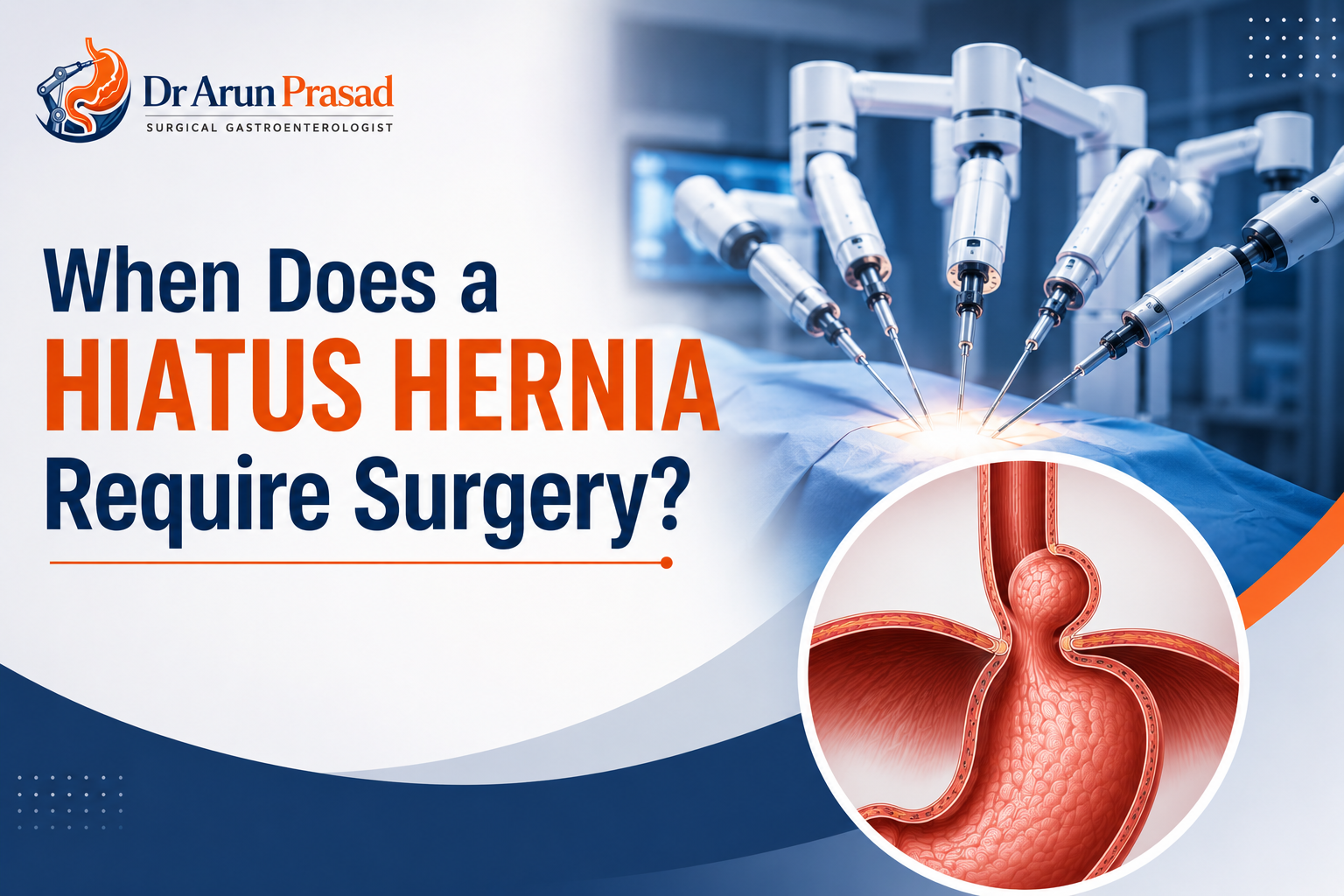
A hiatus hernia occurs when a part of the stomach pushes through the diaphragm into the chest cavity. While many people with a hiatus hernia experience mild or no symptoms, others may develop persistent acid reflux, chest discomfort swallowing difficulties, and complications that affect their quality of life. Understanding When Does a Hiatus Hernia Require Surgery? is essential for making informed treatment decisions.
If you are experiencing severe symptoms that do not improve with medication or lifestyle changes, consulting the Best Hernia Surgeon in Delhi can help determine the most suitable treatment option. Today, Robotic Hernia Surgery in Delhi offers a minimally invasive approach that provides greater precision less pain, and faster recovery for eligible patients.
What Is a Hiatus Hernia?
A hiatus hernia develops when the upper portion of the stomach moves through the natural opening (hiatus) in the diaphragm. The diaphragm normally separates the chest from the abdomen and helps keep the stomach in its proper position.
There are two main types:
- Sliding Hiatus Hernia: The stomach slides up and down through the diaphragm. This is the most common type.
- Paraesophageal Hiatus Hernia: Part of the stomach pushes beside the esophagus and remains there. Though less common, it carries a higher risk of complications.
Common Symptoms of a Hiatus Hernia
Many people may not notice symptoms, but when they occur, they often include:
- Frequent heartburn
- Acid reflux
- Chest pain
- Difficulty swallowing
- Feeling full quickly
- Regurgitation of food or acid
- Chronic cough
- Sore throat
- Hoarseness
- Bloating after meals
Symptoms often worsen after eating large meals, bending over, or lying down.
Can a Hiatus Hernia Be Treated Without Surgery?
Yes. Most patients initially receive non surgical treatment, especially if symptoms are mild.
Conservative treatment may include:
- Acid-reducing medications
- Weight management
- Eating smaller meals
- Avoiding spicy and fatty foods
- Not lying down immediately after eating
- Raising the head of the bed
- Quitting smoking
Many patients experience significant relief through these lifestyle modifications and medications.
When Does a Hiatus Hernia Require Surgery?
Surgery is generally recommended when conservative treatments fail or complications develop.
1. Persistent Acid Reflux
If severe acid reflux continues despite medications, surgery may provide long-term relief by repairing the hernia and strengthening the valve between the stomach and esophagus.
2. Severe GERD
Chronic gastroesophageal reflux disease (GERD) can damage the esophagus over time, leading to inflammation and ulcers. Surgical repair helps prevent ongoing injury.
3. Difficulty Swallowing
Large hiatus hernias can compress the esophagus making swallowing painful or difficult. Surgical correction restores normal anatomy.
4. Large Paraesophageal Hernia
Unlike sliding hernias paraesophageal hernias have a greater risk of becoming trapped or losing blood supply making surgery the preferred treatment even before symptoms become severe.
5. Strangulated Hernia
This is a medical emergency. Blood flow to the trapped stomach becomes compromised, requiring immediate surgery.
Symptoms include:
- Sudden severe chest pain
- Persistent vomiting
- Inability to swallow
- Fever
- Rapid heartbeat
6. Bleeding or Ulcers
Long-standing hiatus hernias may cause ulcers or chronic bleeding that results in anemia. Surgical repair removes the underlying cause.
7. Poor Quality of Life
If symptoms interfere with eating, sleeping, working, or daily activities despite medical treatment, surgery can significantly improve comfort and overall well-being.
How Is Hiatus Hernia Surgery Performed?
Modern surgical treatment is usually minimally invasive.
The procedure typically involves:
- Returning the stomach to its normal position
- Repairing the enlarged opening in the diaphragm
- Strengthening the anti-reflux valve
- Preventing future herniation
Today, Robotic Hernia Surgery in Delhi has become an advanced option for many patients. Robotic technology allows surgeons to perform highly precise movements through small incisions, reducing tissue trauma while improving surgical accuracy.
Benefits of Robotic Hernia Surgery
Robotic-assisted surgery offers several advantages over traditional open surgery.
Benefits include:
- Smaller incisions
- Reduced blood loss
- Less post-operative pain
- Greater surgical precision
- Lower infection risk
- Faster recovery
- Shorter hospital stay
- Earlier return to normal activities
- Better cosmetic results
For appropriately selected patients, robotic surgery has become an excellent option for complex hernia repair.
Recovery After Hiatus Hernia Surgery
Recovery depends on the patient’s health and the surgical technique used.
Most patients can expect:
- Hospital stay of 1–3 days
- Walking within 24 hours
- Soft diet initially
- Gradual return to regular eating
- Light activities within one to two weeks
- Full recovery in four to six weeks
Following your surgeon’s dietary and activity recommendations is essential for optimal healing
Possible Risks of Delaying Surgery
Ignoring severe symptoms can lead to complications such as:
- Progressive GERD
- Esophageal ulcers
- Barrett’s esophagus
- Chronic bleeding
- Severe swallowing problems
- Gastric obstruction
- Strangulation of the stomach
Early evaluation helps prevent these complications and improves long-term outcomes.
Who Is an Ideal Candidate for Surgery?
You may benefit from surgical treatment if you have:
- Persistent reflux despite medications
- Large hiatus hernia
- Paraesophageal hernia
- Recurrent aspiration
- Difficulty swallowing
- Chronic chest discomfort
- Bleeding ulcers
- Barrett’s esophagus associated with reflux
A comprehensive evaluation including endoscopy, imaging, and esophageal function tests helps determine the best treatment plan.
Why Choose Dr. Arun Prasad?
Choosing the right surgeon plays an important role in achieving successful long-term results. Dr. Arun Prasad has decades of experience in treating simple as well as complex hernia cases using advanced laparoscopic and robotic techniques. Every patient undergoes a detailed evaluation to understand the severity of the condition before a personalized treatment plan is recommended.
His focus is always on offering the safest and least invasive surgical option whenever possible, helping patients experience less pain, smaller scars, and a quicker return to daily life. From diagnosis and surgery to post-operative care, patients receive complete guidance at every stage of their treatment. His commitment to evidence-based surgical practices and consistently positive patient outcomes has made him a trusted choice for hernia treatment.
Conclusion
Not every hiatus hernia requires surgery, but persistent symptoms, large hernias, or serious complications should never be ignored. Early diagnosis and timely intervention can prevent long-term damage while significantly improving quality of life. Modern minimally invasive procedures, including robotic surgery, have transformed hernia treatment by offering safer surgery, reduced pain, and quicker recovery. If medications are no longer controlling your symptoms, consulting an experienced specialist can help determine whether surgery is the right solution for your condition.
Frequently Asked Questions (FAQs)
1. Does every hiatus hernia need surgery?
No. Most small hiatus hernias can be managed with medication and lifestyle changes.
2. How do I know if my hiatus hernia is serious?
Persistent reflux, difficulty swallowing, severe chest pain, or vomiting should be evaluated by a surgeon.
3. Is robotic hiatus hernia surgery safe?
Yes. In experienced hands, robotic surgery is a safe and effective minimally invasive treatment.
4. How long does recovery take after surgery?
Most patients recover within 4–6 weeks, with many returning to light activities in 1–2 weeks.
5. Can a hiatus hernia return after surgery?
Recurrence is uncommon but can occur. Following your surgeon’s post-operative instructions helps reduce the risk.
Explore Our Other Treatments :
Best GERD & Esophagus Surgeon in Delhi , Best Proctologist in Delhi , Best Colorectal Surgeon in Delhi , Best Robotic Gastrointestinal in Delhi